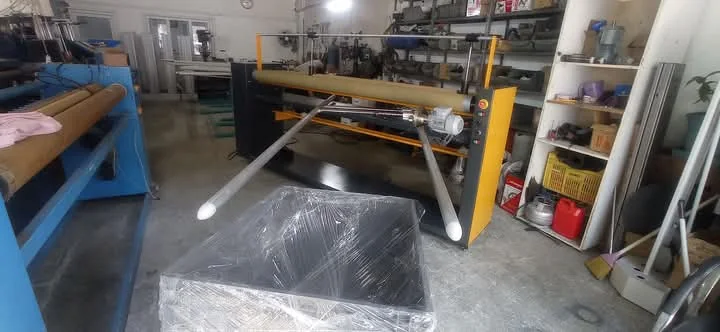
Bias strip behaviour is determined by angle, fabric construction, tube seam, tension and winding, not by angle alone.
Why bias-cut strips behave differently
Cutting across warp and weft changes the forming and stretch behaviour of woven fabrics. A 45-degree angle is a common reference, not a universal setting.
Tube preparation is part of cutting quality
A drifting seam changes the spiral path and strip width. Seam allowance, joint accuracy and tube circumference must be consistent.
Control tension at both extremes
Excess tension can narrow and deform the strip; insufficient tension can cause wrinkles and unstable tracking.
Technical note
The content supports preliminary planning. Final machine configuration and production values must be verified with actual material and written project data.